
Move from Rescuer to Strategist
Focus for January 2026
Understanding: The courage to ask 'why' until the unfamiliar becomes clear.
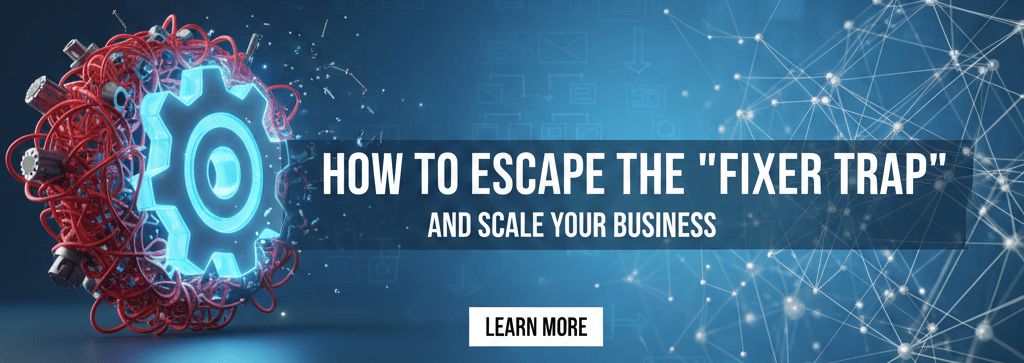
Why Being the Office "Fixer" Is Quietly Sabotaging Your Career (And How to Stop)
Please like the video and subscribe to the channel for more videos.
It is 6:00 PM on a Friday. The office is emptying, but you are still at your desk, meticulously redoing a slide deck for a colleague or troubleshooting a project that isn't even yours. You tell yourself you’re "saving the day" or being the ultimate team player. In reality, you are playing the role of the Fixer.
While the Fixer role feels noble, it is a silent burden that prevents you from the very thing you work so hard to achieve: the ability to Forge Your Path toward senior leadership. As a strategic coach, I see this daily, high-performers who stall out because they have become the office hero. True professional value comes from solving the right problems, not every problem.
Takeaway 1: You’re Trading Innovation for "Maintenance"
One of the most dangerous consequences of being a fixer is falling into the "Reputation Trap." When you are constantly available to pick up the slack, your professional identity shifts. You become known for "maintenance" - the person who keeps the wheels from falling off -rather than "innovation."
In the eyes of executive leadership, there is a massive gulf between a visionary and a janitor. While maintenance keeps the lights on, it rarely leads to a promotion. If your schedule is dominated by fighting "small fires", you are effectively making it impossible to focus on the high-priority, strategic tasks that demonstrate your value.
"Leaders are promoted for their vision, not just for picking up the slack."
To Forge Your Path, you must prioritize work that moves the needle. If you are perpetually stuck fixing yesterday’s mistakes, you will never have the bandwidth to seize tomorrow’s opportunities.
Takeaway 2: The "Rescuer" Label is a Psychological Trap
In workplace psychology, we use the "Drama Triangle" to explain this behavior. The Fixer occupies the role of the "Rescuer." This isn't just about being helpful; it is often an intrusive habit where you offer help that no one actually asked for.
This drive usually stems from internal psychology - a fear of inadequacy or a self-worth that is tied exclusively to being the "problem solver." However, this creates two significant risks:
Professional Desensitisation: You become "numb" to extreme stress levels, losing the ability to recognize when you are reaching a breaking point.
The Intrusive Hero: By jumping in unsolicited, you aren't just helping; you are overstepping. This creates an imbalanced dynamic that focuses on your need to be valued rather than the team's need to succeed.
Takeaway 3: Your Help is Actually Disempowering Your Team
Though you believe you are supporting your colleagues, you are likely creating dependency and learned helplessness. When a Fixer is always present, the team stops learning. They stop thinking critically because they know you will eventually step in to "save" them.
This creates a "hero-victim dynamic" that is ultimately unsustainable. Rather than feeling grateful, your teammates may begin to feel incompetent or controlled. Over time, this erodes their confidence and leads to deep-seated resentment. They don't feel supported; they feel enabled in their own stagnation.
Takeaway 4: You Are Protecting a Broken System
By constantly "saving the day," you are the primary reason your organization remains dysfunctional. This is the most forceful truth of the Fixer role: you are masking systemic issues.
When you bridge the gap caused by a failing process or an underperforming department, management never sees the root cause.
Your "heroism" acts as a temporary bandage that prevents the organization from evolving. For a system to be fixed at a structural level, the failure must be visible. By hiding the cracks, you ensure the building never gets the foundation it needs to grow.
Takeaway 5: Transitioning from Rescuer to Strategist
Moving from a Fixer to a Strategist is a rebranding exercise. This is not a failure of helpfulness; it is the adoption of a more sustainable and higher form of leadership.
To break the cycle, you must shift from doing the work to providing the tools:
Navigate the "Global Yes Trap": In many cultures, saying "no" feels like a betrayal of the team. Understand that being a "team player" does not mean being an enabler. Use clear, professional boundaries to decline non-essential tasks.
Replace Fixes with Questions: When a colleague brings you a problem, don't take the keyboard. Ask: "What do you think the first step should be?" This encourages independence and shifts your role to that of a Coach.
Commit to Internal Work: Use journaling or mindfulness to reflect on your motivations. Are you helping because it is a priority, or because you need to feel valued? Finding the root of these tendencies is essential for growth.
Conclusion: The Power of Release
Professional growth requires creating space. You cannot move into a higher-level role if your hands are always full of other people’s unfinished work. Letting go of problems that are not yours to solve is not an act of negligence - it is a requirement for leadership.
The best leaders do not hold everything together themselves. They build teams that are strong enough to function without them.
By choosing to release, you create the necessary space for your own career path and for your team’s ultimate success.
Next time you are tempted to jump in and save a project, pause and ask yourself: "Is this mine to fix, or mine to release?"

Sources of Information
Based on the sources provided, the following documents were used to compile the information regarding the professional risks, psychology, and strategic transitions related to the "fixer" mentality:
Beyond the Fix: How the Fixer Mentality Affects Relationships
URL: Not explicitly provided (Julia Schwab Therapy)
Description: An educational article by a Licensed Marriage and Family Therapist exploring how a sense of responsibility for others' issues leads to burnout, dependency, and an unsustainable hero-victim dynamic in relationships.
Escaping the Drama Triangle
Description: A Human Resources training document from the University of South Carolina that explains the Karpman Drama Triangle, the traits of the Rescuer (or Fixer), and the high costs of workplace drama to organisational productivity.
The Hidden Cost of Being the Fixer
URL: Not explicitly provided (The Influence Journal)
Description: A leadership journal article defining overfunctioning leadership, where leaders carry weight belonging to others, resulting in learned helplessness within teams and suppressed vision.
From Threats to Scars: Who does HR go to? Understanding Workplace Violence Towards HR Professionals
URL: Research Repository (University of Wales Trinity Saint David)
Description: A research dissertation investigating the prevalence of workplace violence and the "fixer mentality" in HR professionals, highlighting how these individuals often absorb emotional burdens as "toxic handlers."
Developing Facilitation Skills – A Handbook for Group Facilitators
Description: A practical handbook focusing on empowering others rather than performing tasks for them, emphasizing the importance of boundaries and self-awareness in group leadership.
If you are the "Fixer" with your Team, Read This
Description: A blog post targeted at business owners and HR professionals that provides strategies for releasing the fixer role, setting boundaries, and allowing teams to experience natural consequences to foster growth.
Signs of a Savior Complex and How to Overcome It
URL: https://www.verywellmind.com
Description: A psychological resource detailing the Savior Complex (or White Knight Syndrome), explaining how overexerting oneself to meet others' needs can ruin personal mental wellness.
Savior Complex: Rescuing the Rescuer
URL: Not explicitly provided (Resolve Counseling & Wellness)
Description: A professional counselling article that distinguishes between healthy helping (listening and empathy) and a savior complex (spending energy fixing others to the point of burnout).
Social Work vs. "Savior Complex" (r/socialwork Discussion)
Description: A professional development discussion where practitioners explore the line between advocating for change and maintaining a complex that encourages dependency rather than independence.
In the spirit of being a Team Player, the research for this video and blog was collated using Google NotebookLM - an example of using AI as a strategic thought partner.
#CareerAdvice, #Leadership, #WorkplaceDynamics, #BurnoutPrevention, #ProfessionalGrowth, #Strategist, #TeamSuccess, #BoundariesAtWork, #CareerCoaching, #FixerTrap



RFE Online Rooted in purpose. Flourished by action. Expanded by potential.
Newsletter
The Weekly Evolve Insights to help you refine your path and exceed your goals.
© 2024 RFE Online. All rights reserved. | Privacy Policy | Terms and Conditions
Privacy policy | Legal | Terms and conditions