Why Your Business Needs Engineering for the Long Haul

Focus for March 2026
Strengthening the Root: Identifying the core principles and systems that support your business and personal growth before pursuing further expansion.
Why Your "Fast" Growth is Killing Your Future: The Case for Radical Resilience
Please like the video and subscribe to the channel for more videos.
For decades, the technology industry has worshipped at the altar of "Move Fast and Break Things." This mantra treats software as a disposable commodity, prioritizing shallow speed over the structural integrity required to survive market volatility and sophisticated cyber threats. The result is a forest of tall, spindly organizations that look impressive until the first storm of reality hits.
When we prioritize rapid growth without a stable foundation, we accumulate staggering technical debt, the compounded cost of choosing "easy" short-term fixes over durable engineering. To build a business that lasts, we must move beyond this fragile obsession with velocity and embrace Radical Resilience. This is the shift from building brittle branches to cultivating a deep, unshakeable root system.
Radical Resilience is not a call to be slow; it is a mandate to be unshakeable. Just as a tree’s survival depends on its underground architecture, a company's longevity is determined by its foundational choices. Long-term survival requires shifting our focus from raw speed to an uncompromising commitment to architectural integrity.
The Surprising Power of "Boring" Technology
The most sophisticated technology leaders know that innovation is a finite resource, often measured in "innovation tokens." Every time you choose an experimental database or a trendy, unproven framework, you spend a token on infrastructure rather than on the unique business logic that actually drives revenue. High-performing teams protect their company continuity by choosing "boring" technology for their foundation.
"Boring" technology refers to mature, well-established tools where the failure modes (the specific ways a system can break) are documented and predictable. In a crisis, you do not want to be the person discovering a new bug in a niche library; you want the safety of a vast community and decades of documentation. Predictability is not a lack of ambition; it is a high-signal competitive advantage.
To maintain this discipline, apply the 10-Year Test as a rigorous framework for every architectural decision. First, evaluate the ecosystem: has the tool survived multiple market cycles? Second, audit the documentation: is there a decade’s worth of solved edge cases? Finally, project the vendor's health: will this stack be understood and supported ten years from now?
"When a problem arises in a mature stack, there is usually a vast community and wealth of documentation available to help resolve it."

Security Must Be a Root, Not a Wall
The legacy obsession with "perimeter security" is a structural hallucination. Treating security like a wall around a city assumes that once the perimeter is breached, the interior is safe, a philosophy that leads to catastrophic, systemic collapses. Radical Resilience demands we move toward "security by design," where security is a root that penetrates every layer of the architecture.
This shift focuses on building core resilience through Fault Isolation. By designing a system where failures in one module are strictly contained, we ensure that a single compromised component cannot trigger a cascade that brings down the entire organization. In this model, the system is engineered to remain standing even when individual parts are actively failing.
We must accept that complexity is the ultimate enemy of safety. Simple, modular systems are inherently easier to audit, monitor, and defend than monolithic tangles. By engineering security into the core from day one, we eliminate "security debt", the lethal accumulation of risk that comes from ignoring vulnerabilities during the initial design phase.
We must accept that complexity is the ultimate enemy of safety. Simple, modular systems are inherently easier to audit, monitor, and defend than monolithic tangles. By engineering security into the core from day one, we eliminate "security debt", the lethal accumulation of risk that comes from ignoring vulnerabilities during the initial design phase.
"Radical resilience requires a shift in perspective... moving away from 'perimeter security' to 'security by design.'"
Scaling via Modularity (The 6,000x Advantage)
Scaling a business should never mean scaling its fragility. Traditional monolithic architectures, where every part of the code is tightly coupled, eventually collapse under their own weight, consuming as much as 80% of IT budgets in maintenance alone. This "monolithic tax" effectively bankrupts a company's ability to innovate, leaving it trapped in a cycle of expensive preservation.
Modular architecture offers a radical alternative by dividing complex systems into self-contained, interchangeable components. This isn't just a theoretical preference; it is a documented performance engine. The 2024 DORA Report highlights that elite teams leveraging modularity achieve:
1,000x higher deployment frequency than their monolithic peers.
6,570x faster service restoration times during incidents.
These numbers represent more than just efficiency; they represent a total strategic advantage. Modularity allows for the independent scaling of high-traffic components, ensuring that resources are allocated where they create the most value. By breaking the monolith, you reclaim your budget from the maintenance trap and reinvest it into growth.

Combatting "Architectural Entropy" with Culture
Systems naturally drift toward disorder, a phenomenon known as architectural entropy. Unlike physical decay, this technical rot is driven by uncertainty, complexity, and the pressures of unpredictable business changes. If left unmanaged, this entropy leads to architectural decay, making the system progressively harder to understand, maintain, and evolve.
The primary defense against this decay is not better software, but a Root Cause Culture. This is a sophisticated organizational mindset where every failure is treated as a diagnostic tool rather than a source of blame. Engineers are empowered to ignore "quick fixes" in favor of investigating the underlying architectural flaws that allowed the failure to occur in the first place.
To keep your system's roots healthy and entropy at bay, implement these three strategies:
Incremental Refactoring: Replace high-risk, "big bang" overhauls with continuous, manageable improvements to the codebase.
Invest in Automation: Use automated testing and CI/CD pipelines to enforce consistency and catch deviations before they become permanent.
Maintain Transparency: Regularly audit the "as-is" state against the "as-planned" architecture to identify and correct drift immediately.
Conclusion: The Long-Game Advantage
The companies that will survive the next major market storm are not those that moved the fastest, but those that built the deepest roots. Radical resilience is a commitment to architectural integrity over raw speed and quality over hype. While this deliberate pace may seem conservative to some, it creates a system unencumbered by the debt that eventually bankrupts "fast" movers.
By reclaiming the 80% of the budget typically lost to monolithic maintenance, resilient organizations fund their own future. They build systems that are ready to evolve for decades rather than just the next quarter. As you look at your current roadmap, you must ask the hardest question in technology: Is your architecture built to survive a decade, or is it merely designed to survive the week?

Sources of Information
Based on the sources provided, here is the list of documents used to create the blog post "Engineering for the Long Haul."
Ask HN: Skeptical about my company going “full serverless”. What am I missing?
Description: A community discussion thread from Hacker News where developers and architects debate the practical use cases for serverless technology versus traditional infrastructure, emphasizing the importance of "choosing boring technology" for reliability.
Blog | Remove Operational Bottlenecks, Prove ROI | Albright Labs
Description: A collection of professional blog posts focused on software engineering best practices, including the benefits of incremental refactoring, effective database management, and the stability provided by mature, "boring" technology stacks.
Modular architecture: A scalable and efficient system design approach for enterprise applications
Description: A review article detailing how modular architecture divides complex systems into self-contained components to enhance fault isolation and scalability. It cites data from the 2024 DORA Report regarding the high restoration speeds of elite teams using modular designs.
Moving Fast vs Root Cause Culture - How Teams Grow - CodeCube Ventures
URL: N/A (Source Title)
Description: An article by Joel Martinez exploring the tension between the "move fast and break things" industry mantra and the necessity of a "root cause culture" that prioritizes learning from failures to ensure long-term stability.
CCS Architectural entropy – an in-depth case study of security debt and architecture scope creep - Academic Publications
Description: An academic publication defining "architectural entropy" as the disorder that builds up in a system due to complexity and technical debt. It advocates for "security-at-root" and "secure-by-design" principles to thwart modern cyber threats.
Advice – charity.wtf
URL: https://charity.wtf/
Description: A blog by Charity Majors providing expert perspective on sociotechnical systems, engineering management, and the organizational benefits of using well-understood, predictable "boring" technologies and cultures.
Is the Build Faster concept right for your Business
#RadicalResilience, #TechDebt, #SoftwareEngineering, #SystemArchitecture, #BoringTech, #CyberSecurity, #SustainableTech, #CloudScaling, #EngineeringLeadership, #FutureProofTech
Most Recent Insights

In an era dominated by the mantra "Move Fast and Break Things," many organizations are discovering the hidden costs of disposable software: mounting technical debt and extreme vulnerability to market shifts .

Most career advice focuses on finding a smooth road to success, but what happens when the door is bolted shut?
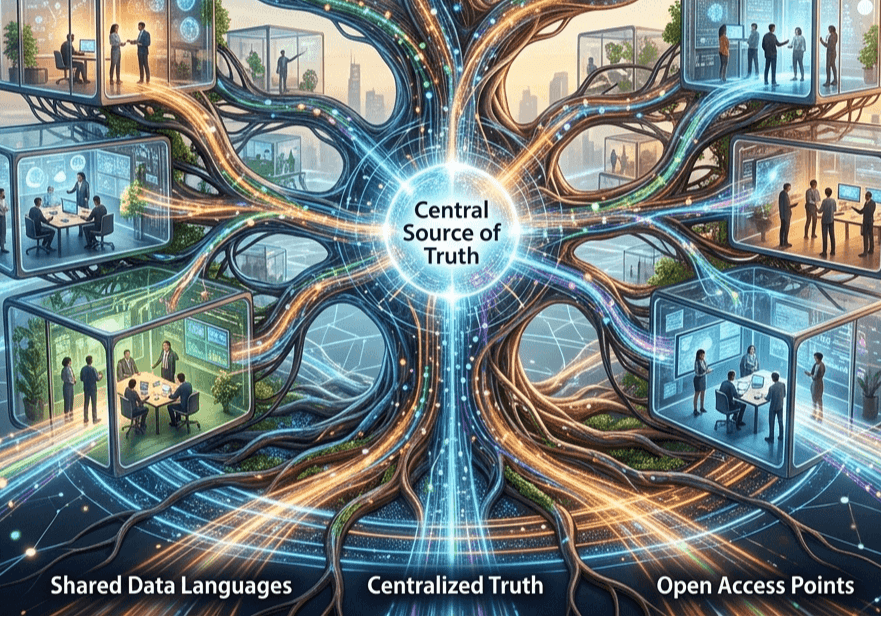
Are invisible walls slowing your team down? In many modern organizations, information remains trapped in separate "rooms" or silos, which are isolated departments that function apart from others and hinder cooperation .

Are you finding it hard to tell where your work life ends and your personal life begins?

In an era of "infinite tasks," many professionals have lost the time to actually be human . We spend our days "moving dirt"—performing manual reporting, calendar management, and repetitive data entry - instead of growing our careers .
Expertise List

Dedicated to empowering high-achieving individuals as they navigate the critical transition from initial "idea" phases to "market-ready" career pivots.
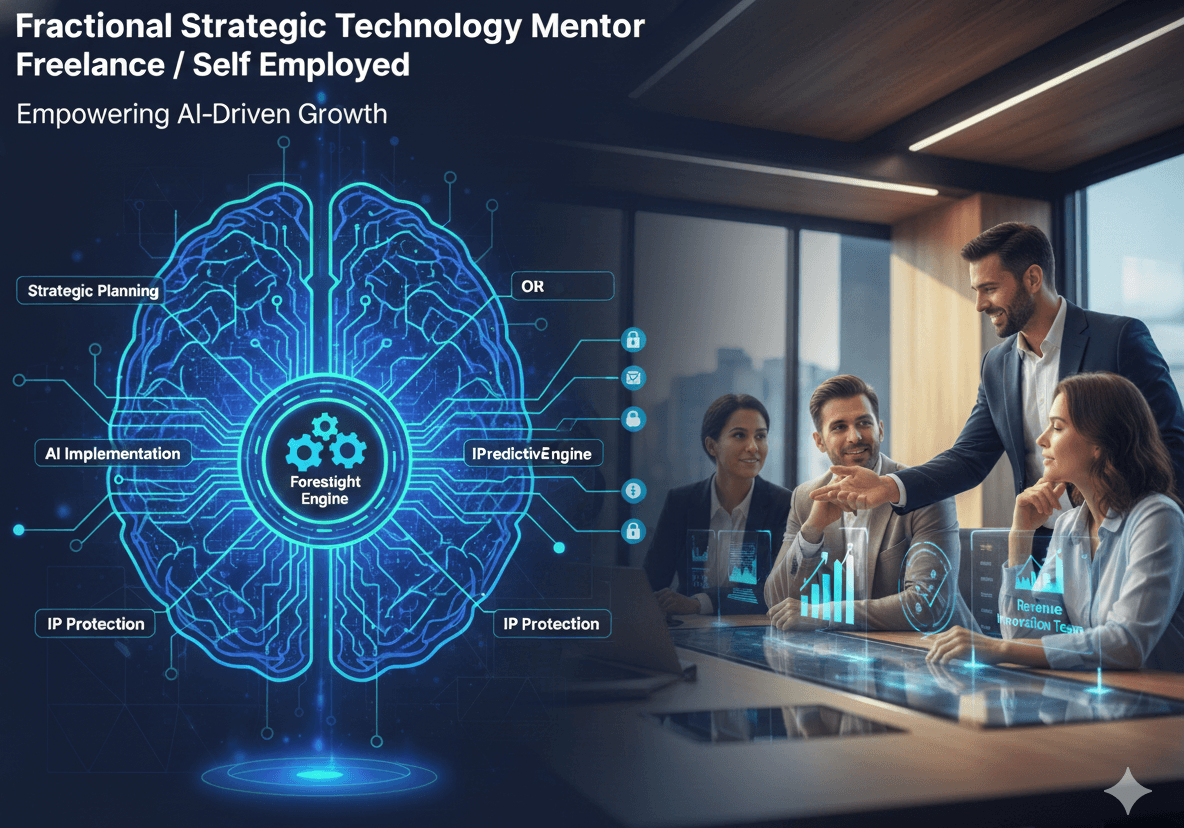
Acted in the capacity of an embedded strategic partner for Business Owners, I focus on translating core business objectives into high-performing, AI-driven systems.
This was a strategic leadership role focused on modernizing the company’s operations through technology, automation, and workforce development.
A high-impact leadership role centered on scaling a small business into a multi-state enterprise through aggressive digital transformation and process optimization.
Operations leader and digital transformation expert. Proven record modernizing infrastructure and cloud migrations, cutting data errors from 30% to <1%. Skilled in CRM architecture and vendor management, saving $300k annually through optimization.




JOIN MY MAILING LIST
RFE Online Rooted in purpose. Flourished by action. Expanded by potential.
Newsletter
The Weekly Evolve Insights to help you refine your path and exceed your goals.


© 2024 RFE Online. All rights reserved. | Privacy Policy | Terms and Conditions
Privacy policy | Legal | Terms and conditions