The Denomination Effect Explained

Focus for March 2026
Strengthening the Root: Identifying the core principles and systems that support your business and personal growth before pursuing further expansion.
Why Your Brain Thinks $1,000 Isn’t Always $1,000: 5 Shifts for a Frictionless Financial Future
Please like the video and subscribe to the channel for more videos.
In the relentless pursuit of wealth, most founders and investors fixate on the "financial fruit" - the quarterly profits, the high-yield returns, and the next major growth milestone. But as any seasoned strategist knows, a harvest is only as reliable as the system that produced it. To build a portfolio or a business capable of weathering an economic storm, you must stop obsessing over the fruit and start Strengthening the Root.
True financial resilience is rarely a numbers game; it is a psychological and structural one. By moving away from high-friction, manual processes and toward automated "digital buckets," you can transform financial management from a source of chronic anxiety into a frictionless engine for growth.
1. The Irrational Accountant: Why Fungibility is a Financial Myth
In classical economic theory, money is "fungible." This means every Euro is identical and interchangeable. However, in the theater of the human brain, fungibility is a myth. We naturally operate under Mental Accounting Bias, valuing money differently based on its source or its intended destination.
Consider the common behavioral trap: most people are far more likely to splurge a $1,200 tax refund on a luxury holiday than they are to take $1,200 out of their hard-earned monthly salary for the same purpose. We treat "found money" with reckless abandon while guarding "utility money" with discipline.
As a digital strategist, you shouldn't fight this irrationality - you should weaponize it. By labeling money for specific purposes, your brain begins to view those funds as "already gone." This creates a psychological barrier that prevents "accidental spending" on essential reserves like taxes or mortgages.
Economically speaking, money is fungible - $1 is equal to any other $1. However, our feelings are not fungible.

2. The Death of the Envelope: Engineering Low-Friction Systems
For decades, the "envelope system", stuffing physical cash into paper sleeves labeled "Rent" or "Taxes", was the gold standard for discipline. It worked because of friction; it is physically difficult to spend your rent money when it is tucked away in a dedicated sleeve. But for a modern scaling business, physical cash is a high-friction relic that earns zero interest and offers zero visibility.
The modern solution is the "Digital Bucket" system using platforms like Relay or Mercury for business, and Ally or N26 for personal finance. These tools allow you to create virtual sub-accounts that offer three distinct advantages:
Automation: Percentage-based rules sort every incoming payment into categories like Income, Tax, OpEx (Operating Expenses), and Profit without human intervention.
Yield: Unlike paper envelopes, digital buckets can be housed in high-yield accounts, ensuring your tax reserves earn interest while waiting for the government.
Strategic Friction: This is the ultimate hack. The system is low-friction for the user (it happens automatically) but high-friction for the impulse. Because the money is already labeled and moved, the impulse to spend "surplus" cash is neutralized before it begins.
3. Nourishing the Root: The Survival vs. Growth Hierarchy
A resilient financial structure requires a clear hierarchy of flow. To build this, you must define two non-negotiable metrics:
The Personal Survival Number (The Floor): The absolute minimum cash required to cover basic life needs - housing, food, and utilities.
The Business Growth Number (The Ceiling): This covers your basic business overhead plus the strategic surplus required for marketing, scaling, and new tools.
Your automated digital buckets should be programmed to nourish the root first. The system must fill the Survival Number before a single Euro of "overflow" is permitted to reach the Growth buckets. This structural hierarchy ensures that even during a lean month or a market dip, your core remains protected and functional.

4. The Strategic Flip: Why "Profit First" is the Only Way to Scale
Traditional accounting follows a logic that often leaves a business "Default Dead" - waiting for a miracle to survive. The traditional formula is: Sales - Expenses = Profit
The danger here is that expenses are infinite. They tend to expand to consume whatever revenue is available, leaving profit as a lucky accident. To scale effectively, you must apply the Strategic Flip: Sales - Profit = Expenses
By treating Profit as a bucket that must be filled before bills are paid, you force resource efficiency. You are required to manage your business within the remaining "Expenses" bucket. Without this flip, a business is essentially a "zombie" - functioning on paper but one market fluctuation away from collapse. Moving profit off the top ensures your business remains "Default Alive."
5. From Anxiety to Strategy: Calculating Your Runway
Financial anxiety is almost always a byproduct of ambiguity. When you don't know your numbers, you operate on fear. To shift to a strategic footing, you must understand your Burn Rate to determine your "Runway."
Gross Burn: Your total monthly operating costs.
Net Burn: Your total costs minus your revenue.
For example, if your business has a Net Burn of $10,000 and you have $60,000 total across your digital buckets, you have a six-month runway.
"Knowing this number turns financial management from an emotional 'anxiety' into a strategic 'decision-making tool'."
Once you know you have six months of life ahead of you, the panic subsides, and you can make objective decisions about scaling, cutting costs, or pivoting.
Conclusion: Building a Resilient Root
The transition from high-friction, manual budgeting to a low-friction, automated digital bucket system is the most effective way to protect your financial future. It acknowledges the reality of human behaviour - that we are driven by labels and emotions - and uses that bias to build a fortress.
You don't need to overhaul your entire architecture today. Start small: open a dedicated Profit Bucket and allocate just 1% of your income to it this week. As you define your Survival Number and nourish your roots, you create a system that grows while you sleep. The question is no longer "How much can I make?" but rather, "How resilient is the root that supports it?"

Sources of Information
Based on the documents used to construct the blog post regarding frictionless finance and psychological accounting, here is the source information list:
Document Name: Denomination effect - Wikipedia
Description: An article explaining the cognitive bias where people are less likely to spend larger currency denominations than an equivalent value in smaller ones.
Document Name: Goals and Psychological Accounting
URL: IZA DP No. 5802
Description: A research paper modelling how individuals formulate and evaluate goals using narrow or broad psychological accounts to overcome self-control problems.
Document Name: How to use the Profit First method to boost your startup or small business's profit - Mercury
Description: A guide on the "Profit First" accounting method, which prioritizes profit by taking it off the top of revenue before paying expenses.
Document Name: Manage your bills like a pro: introducing Spaces with IBANs - N26
Description: An overview of N26’s "Spaces" feature, which allows users to create digital sub-accounts with unique IBANs for automated bill payments and organization.
Document Name: Mental accounting - Wikipedia
Description: A comprehensive look at Richard Thaler’s model of consumer behavior describing how people categorize and evaluate economic outcomes.
Document Name: Profit First Percentages for Different Types of Small Businesses - Relay
Description: A detailed breakdown of target allocation percentages for various small business types using the Profit First methodology.
Document Name: Understanding burn rate: How to calculate it and why it matters for startups - Aspire
Description: A technical guide defining gross and net burn rates and explaining how founders can use these metrics to forecast their cash runway.
Document Name: Turning Invisible Money Habits into Powerful Levers - Mental Accounting - Cheesy Goulash
URL: Cheesy Goulash Blog
Description: A blog post exploring the essence of mental accounting, the "Money Map" exercise, and the concept of "coupling" in payments.
Document Name: What is a Sinking Fund? A Complete Guide - The Ways To Wealth
URL: The Ways To Wealth
Description: An educational guide on using sinking funds to set aside money over time for specific, irregular upcoming expenses.
In our world, finance is king.
#DenominationEffect, #MentalAccounting, #MoneyPsychology, #ProfitFirst, #PersonalFinance, #SavingTips, #BehavioralEconomics, #FinancialFreedom, #Budgeting, #SinkingFunds
Most Recent Insights

In an era dominated by the mantra "Move Fast and Break Things," many organizations are discovering the hidden costs of disposable software: mounting technical debt and extreme vulnerability to market shifts .

Most career advice focuses on finding a smooth road to success, but what happens when the door is bolted shut?
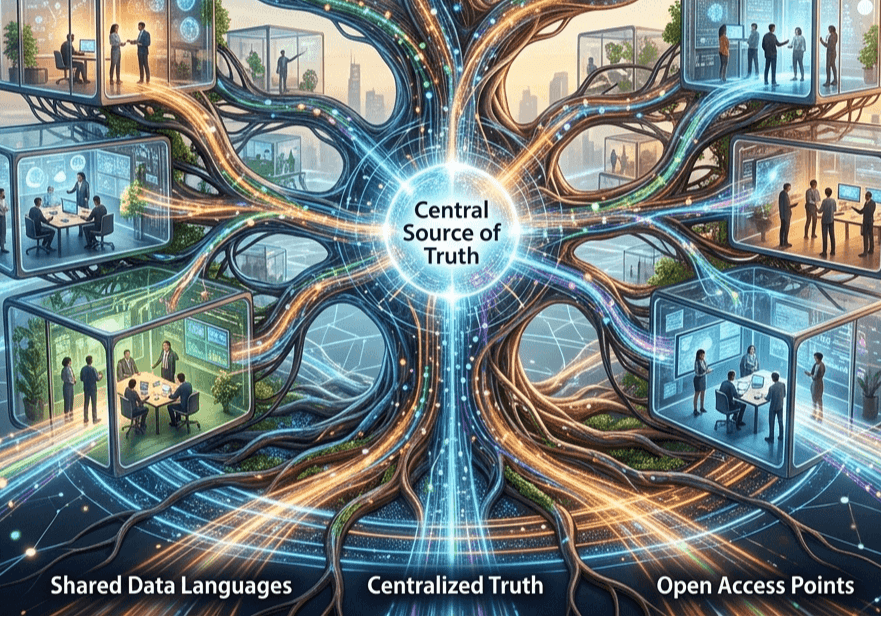
Are invisible walls slowing your team down? In many modern organizations, information remains trapped in separate "rooms" or silos, which are isolated departments that function apart from others and hinder cooperation .

Are you finding it hard to tell where your work life ends and your personal life begins?

In an era of "infinite tasks," many professionals have lost the time to actually be human . We spend our days "moving dirt"—performing manual reporting, calendar management, and repetitive data entry - instead of growing our careers .
Expertise List

Dedicated to empowering high-achieving individuals as they navigate the critical transition from initial "idea" phases to "market-ready" career pivots.

Acted in the capacity of an embedded strategic partner for Business Owners, I focus on translating core business objectives into high-performing, AI-driven systems.
This was a strategic leadership role focused on modernizing the company’s operations through technology, automation, and workforce development.

A high-impact leadership role centered on scaling a small business into a multi-state enterprise through aggressive digital transformation and process optimization.

Operations leader and digital transformation expert. Proven record modernizing infrastructure and cloud migrations, cutting data errors from 30% to <1%. Skilled in CRM architecture and vendor management, saving $300k annually through optimization.




JOIN MY MAILING LIST
RFE Online Rooted in purpose. Flourished by action. Expanded by potential.
Newsletter
The Weekly Evolve Insights to help you refine your path and exceed your goals.


© 2024 RFE Online. All rights reserved. | Privacy Policy | Terms and Conditions
Privacy policy | Legal | Terms and conditions