Are You Too Close to Your Coworkers

Focus for March 2026
Strengthening the Root: Identifying the core principles and systems that support your business and personal growth before pursuing further expansion.
The Work Bestie Blur: 5 Signs Your Workplace Friendship Needs a Professional Pivot
Please like the video and subscribe to the channel for more videos.
Introduction: The "Bestie" Blur
For most professionals, high-quality workplace relationships are the highlight of the week. Having a "work bestie" to navigate complex deadlines, celebrate shared wins, and vent frustrations provides a vital sense of trust and psychological safety. However, when the line between personal and professional lives becomes unclear (or "fuzzy") it creates the "Bestie Blur." This lack of privacy often leads to emotional confusion, resource exhaustion, and a measurable dip in professional performance.
Navigating these dynamics effectively requires strengthening "the root", your internal stability. This foundation allows you to remain grounded and secure regardless of external pressures. When your root is out of balance, your professional boundaries often fail in one of two ways: they become too soft and undefined, leading to oversharing, or they become too rigid and robotic, stifling healthy collaboration. Implementing a Professional Pivot is not a rejection of friendship; it is a strategic necessity for maintaining your executive presence and operational focus.
Takeaway 1: Identifying the "Too Personal" Threshold
The shift from healthy collegial support to a professional burden usually occurs when the relationship enters the territory of "emotional dependence." This happens when you begin to rely on a co-worker for constant validation or emotional soothing to function in your role.
The Self-Check: To evaluate your current dynamic, perform a diagnostic check of your "root" stability by asking: Would you feel emotionally unsteady or unable to perform your duties if your work friend took a day off?
If the answer is yes, it is a clear sign of a weakened root. You are no longer anchored by your own professional values but by the presence of another. Other Signs of Over-integration include:
Constant non-work messaging during off-hours: This prevents you from anchoring yourself in your personal life and recovering from work stress.
Emotional fatigue: You feel mentally drained from managing their personal crises rather than your own deliverables.
A "romanticism" to the connection: Interactions feel secretive or intense, leading to a craving for more time together that distracts from organizational goals.
Office Politics Pressure: You feel "trapped" into taking sides in cliques or workplace conflicts simply to prove your loyalty to the friend.
Feelings of guilt or anxiety: You find yourself hiding the depth of your interactions from other colleagues or leadership.
Takeaway 2: The Hidden Cost of Emotional Over-Integration
When workplace friendships become over-integrated, they trigger "resource exhaustion" and role ambiguity. This dynamic often leads to "compulsory citizenship behaviours," where you feel forced to help a friend with their tasks regardless of your own heavy workload.
"Oversharing personal information can lead to resource exhaustion and role ambiguity."
This oversharing creates a significant professional hurdle: when you know too much about a peer’s personal struggles, it becomes difficult to provide objective feedback or hold them accountable to their job description. This role ambiguity doesn't just hurt the two individuals involved; it impacts the broader team. When a relationship consumes too much emotional real estate, the individuals involved often withdraw from other team members, damaging team cohesion and compromising the perception of fairness.
Takeaway 3: Master the "Professional Pivot" (The Reset)
If a work friendship has become an emotional or professional burden, you must execute a "Professional Pivot." This is a strategic reset of expectations designed to protect your career trajectory while maintaining relational equity.
The Soft Reset: Gradually shift your interactions back to neutral, work-related topics. If a colleague shares sensitive personal information, professionally steer the conversation back to project updates or team milestones.
Time Boxing: Limit personal conversations to designated breaks, such as lunch. Outside of these windows, focus strictly on professional tasks to maintain "mutual professional boundaries", the necessary restrictions that allow individuals to work together with mutual respect.
Communication Scripts for a Professional Reset
The Goal
The Script
Maintaining Focus
"I am trying to stay focused on this project right now. Let’s catch up during lunch instead."
Setting Off-Hour Boundaries
"I’ve realized I need to be more mindful of my work hours. I won't be checking non-work messages after 6 PM."
Takeaway 4: Navigating the "Managerial Wall"
Setting boundaries is a non-negotiable requirement when one friend transitions into a supervisory role. This shift is notoriously difficult; research indicates that 70% of individuals have lost friendships after becoming a manager.
Establishing authority requires clear, firm boundaries to ensure professional respect remains intact and that all team members are treated with visible fairness. Acknowledging the change directly, by discussing new expectations and potential concerns, actually leads to higher levels of clarity and long-term relationship satisfaction.
Takeaway 5: Boundaries as Protection, Not Rejection
Implementing new limits often leads to an "awkward phase" marked by guilt or the fear that a friend feels rejected. It is helpful to remember that a relationship does not need to be "bad" to warrant a new definition. Realigning a friendship is an act of care for your career and the relationship itself.
"Boundaries do not end friendships; they protect them."
To succeed, embrace the concept of "bounded emotionality." This means expressing authentic feelings and bonding with colleagues within the guardrails of professional expectations. True professional friends do not shy away from structure; they recognize that clear rules keep relationships grounded, respectful, and sustainable.
Conclusion: Protecting Your Space to Breathe
While work friendships are vital human connections, they require a firm professional foundation to flourish without causing burnout. You can be an excellent, supportive, and authentic colleague without being an "open book" to everyone in the office.
By identifying when a connection has become an emotional burden and utilizing a professional pivot, you safeguard both your reputation and your mental well-being. Is your most valued work relationship giving you the space you need to breathe, or is it time for a strategic reset?

Boundaries strengthen the relationship with yourself and others.
#WorkplaceFriendship, #ProfessionalBoundaries, #CareerAdvice, #MentalWellness, #OfficeDynamics, #WorkLifeBalance, #ProfessionalPivot, #LeadershipTips, #HealthyWorkplace, #Boundaries
Sources of Information
Based on the sources used to create the blog post, here is the information list of document names, URLs, and descriptions:
6 Warning Signs You Are Too Close to a Coworker - Mary Jo Rapini
Description: This source outlines specific red flags in workplace relationships, such as emotional dependence, the overriding of professional norms, "romanticism" in connections, and feelings of guilt or anxiety that signal a need to realign with personal values.
A guide to your root chakra
URL: Not provided in the sources.
Description: This document explains the concept of the "root," or Muladhara, as the foundation for internal stability, security, and the ability to demonstrate appropriate boundaries, while identifying symptoms of an out-of-balance root such as soft or undefined personal boundaries.
Bounded emotionality - Wikipedia
Description: This Wikipedia entry defines "bounded emotionality" as a workplace approach that encourages expressing emotions to maintain interpersonal relationships while respecting "intersubjective limitations," which are necessary restrictions for professional respect.
Why and when workplace friendship has a differentiated effect on relationship norms and helping behaviour - selfdeterminationtheory.org
Description: This research article details the potential downsides of overly close workplace friendships, including role ambiguity, resource exhaustion, and "compulsory citizenship behaviors" where employees feel forced to help regardless of their own workload.
Navigating the Transition: When Your Work Bestie Becomes Your Boss - Lloyd Staffing
URL: Not provided in the sources.
Description: This blog post focuses on the challenges of shifting power dynamics in work friendships, citing studies that show 70% of individuals have lost friendships after becoming a manager and emphasizing the importance of open communication regarding expectations.
Most Recent Insights

In an era dominated by the mantra "Move Fast and Break Things," many organizations are discovering the hidden costs of disposable software: mounting technical debt and extreme vulnerability to market shifts .

Most career advice focuses on finding a smooth road to success, but what happens when the door is bolted shut?

Are invisible walls slowing your team down? In many modern organizations, information remains trapped in separate "rooms" or silos, which are isolated departments that function apart from others and hinder cooperation .

Are you finding it hard to tell where your work life ends and your personal life begins?

In an era of "infinite tasks," many professionals have lost the time to actually be human . We spend our days "moving dirt"—performing manual reporting, calendar management, and repetitive data entry - instead of growing our careers .
Expertise List

Dedicated to empowering high-achieving individuals as they navigate the critical transition from initial "idea" phases to "market-ready" career pivots.
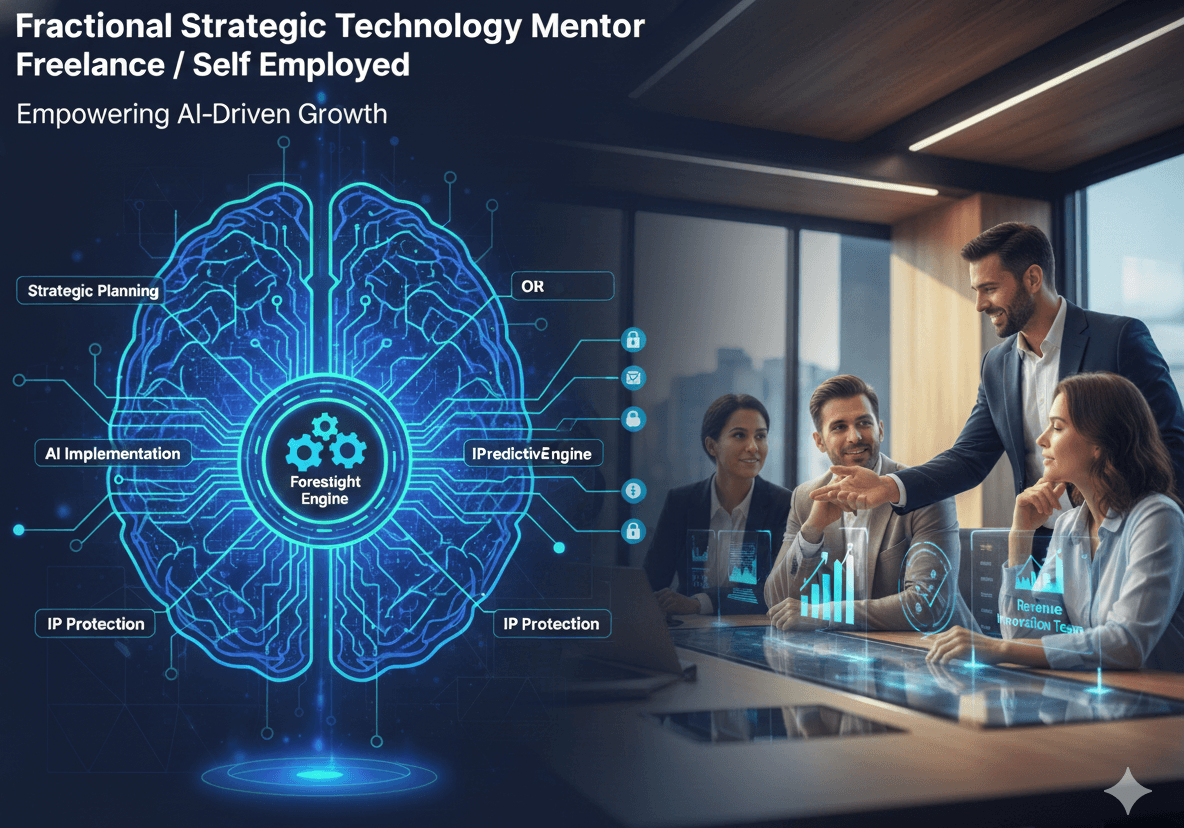
Acted in the capacity of an embedded strategic partner for Business Owners, I focus on translating core business objectives into high-performing, AI-driven systems.
This was a strategic leadership role focused on modernizing the company’s operations through technology, automation, and workforce development.
A high-impact leadership role centered on scaling a small business into a multi-state enterprise through aggressive digital transformation and process optimization.
Operations leader and digital transformation expert. Proven record modernizing infrastructure and cloud migrations, cutting data errors from 30% to <1%. Skilled in CRM architecture and vendor management, saving $300k annually through optimization.




JOIN MY MAILING LIST
RFE Online Rooted in purpose. Flourished by action. Expanded by potential.
Newsletter
The Weekly Evolve Insights to help you refine your path and exceed your goals.


© 2024 RFE Online. All rights reserved. | Privacy Policy | Terms and Conditions
Privacy policy | Legal | Terms and conditions