The Leader’s Superpower: Why Vulnerability is the Key to Employee Retention
Focus for February 2026
Harmonic Integration: Ensuring your daily habits and professional goals mirror your internal values to create a life that feels consistent and authentic.
Why Leading With "Heart" is Your Company’s Secret Weapon for Talent Retention
Please like the video and subscribe to the channel for more videos.
The Myth of the Infallible Leader
For decades, the corporate gold standard was the "bulletproof" executive, an infallible figure who projected absolute certainty and never showed a crack in their professional armor. But in today’s volatile market, that armor has become a cage. Modern talent no longer draws inspiration from a pedestal; they seek connection. The tectonic shift toward Harmonic Integration, the deliberate merging of professional objectives with fundamental human needs, demands a new leadership blueprint. The central reality is this: vulnerability is not a weakness. It is a high-impact retention strategy that transforms a cold workplace into a resilient community.
The $180 Billion Cost of Being a Stranger
Leading without heart isn't just a cultural oversight, it’s a balance-sheet hemorrhage. Organizations that fail to operationalize empathy are paying a "detachment tax" through staggering employee attrition, a figure estimated at $180 billion annually. The data is unforgiving: when employees characterize their workplace as "unempathetic," they are 1.5 times more likely to change jobs in the short term.
Empathy has moved from the HR "nice-to-have" list to the CFO’s priority list. In a mobile talent market, if you don't truly know your people, you won't keep your people. The cost of remaining a stranger to your team is a bill few companies can afford to pay.
The 60% Trust Dividend and Psychological Safety
At the core of a high-retention culture is psychological safety - the environmental condition where team members feel empowered to take risks and speak up without the shadow of humiliation or professional reprisal. This safety is not born from policy; it is cultivated when leaders humanize themselves by admitting they don't have all the answers.
The impact of this openness is quantifiable: leaders who display vulnerability are 60% more likely to build trust within their teams. This trust is the foundation upon which all organizational agility is built.
"Vulnerability is not a weakness; it is a high-impact retention strategy that creates the deep, lasting connections necessary to keep talent from walking out the door."
The Resilience Multiplier: Why Vulnerable Teams Don't Quit
When leaders are honest about setbacks, they dismantle the fear of failure and replace it with a "growth-oriented mindset." This honesty yields a 40% increase in worker resilience and a 25% boost in engagement levels, creating a buffer against the burnout that drives turnover.
Deep personal connections act as the "psychological glue" for team stability. This goes beyond mere friendliness; it creates a sense of reciprocity. When a leader is vulnerable, the employee feels a psychological "debt of care" to the collective. They become less likely to leave for a marginal salary increase elsewhere because they aren't just leaving a role, they are leaving a relationship.

The Art of Selective Transparency
While vulnerability is a superpower, it requires professional boundaries to remain a strategic lever rather than a liability. This is managed through Selective Transparency, the practice of being open in a thoughtful, intentional way rather than engaging in "emotional venting."
To maintain these boundaries and protect the team's focus, leaders should avoid sharing:
Detailed personal health or relationship issues: These can burden team members with emotional labor they are not equipped to handle.
Personal financial struggles: Such disclosures can erode confidence in a leader’s professional judgment and stability.
Venting without a solution: This risks making employees feel responsible for managing their manager's emotional state.
The most effective leaders pair challenges with solutions. By sharing a struggle while simultaneously presenting a path forward, you demonstrate the honesty that builds trust and the confidence that maintains stability.
Leadership in Action: Lessons from Microsoft and PepsiCo
High-stakes environments prove that vulnerability is a hallmark of world-class leadership. At Microsoft, Satya Nadella famously shares his mistakes and learnings at the start of meetings, signaling that perfection is not a prerequisite for success. By being open about how his son’s medical challenges informed his leadership journey, Nadella transitioned personal experience into a framework of "professional empathy" that reshaped Microsoft’s entire culture.
Similarly, Indra Nooyi, former CEO of PepsiCo, spoke candidly about the "guilt" of balancing motherhood with the demands of the C-suite. She didn't just share the struggle; she used it to drive systemic organizational change, advocating for and implementing on-site childcare and flexible work-life policies. Both leaders proved that vulnerability, when channeled strategically, becomes a catalyst for institutional progress.
A Starter Kit for Open Leadership
Shifting the dynamic from "boss" to "teammate" requires consistent, small-scale actions that flatten the hierarchy:
Share a Lesson Learned: By admitting a minor mistake and the resulting takeaway, you show the team that you value growth over the facade of perfection.
Active Listening: Asking "How are you actually doing?" and pausing for the real answer removes the hierarchy of speaker versus listener and creates a peer-to-peer human moment.
Ask for Help: Involving your team in a problem you are struggling with demonstrates that you respect their expertise and value collaborative effort over top-down authority.
Seek Feedback: Regularly asking colleagues if your level of transparency is striking the right balance ensures your openness remains professional and effective.
Conclusion: The Future of Irreplaceable Leadership
The long-term health of any organization depends on the strength of its human relationships. Vulnerability is the catalyst that creates a culture of mutual support, ensuring that a team remains resilient regardless of the obstacles they face
In a world defined by constant change and professional volatility, leading with heart does not make a leader "soft", it makes them irreplaceable. By embracing authenticity, you build a workplace where employees feel heard, empowered, and, most importantly, committed to staying.
If the cost of silence is $180 billion, what is the value of your next honest conversation?
In the spirit of creating a heart with the right information, the research for this video and blog was collated using Google NotebookLM - an example of using AI as a strategic thought partner.
#Leadership, #EmployeeRetention, #WorkplaceCulture, #Vulnerability, #PsychologicalSafety, #ManagementTips, #BusinessGrowth, #HarmonicIntegration, #RetentionStrategies, #AuthenticLeadership
Sources of Information
Based on the information used to create the blog post, the following is a list of the source documents, their descriptions, and any available URLs found within the sources.
1. The Power of Vulnerability in Leadership | Horton International
URL: Not explicitly provided in the text.
Description: This source provided critical statistical evidence regarding the benefits of vulnerable leadership. Key data points included that leaders who display vulnerability are 60% more likely to build trust and that organisations encouraging vulnerability see a 40% increase in worker resilience, leading to lower turnover rates. It also cited Gallup research indicating a 25% increase in employee engagement in teams with vulnerable leaders.
2. Empathetic leadership has ROI for employee retention, report indicates - HR Dive
URL: Not explicitly provided in the text.
Description: This report detailed the financial and organisational consequences of failing to operationalise empathy. It provided the estimate that businesses could face $180 billion annually in employee attrition costs and noted that employees in "unempathetic" workplaces are 1.5 times more likely to change jobs in the short term.
3. How Can Managers Be Vulnerable Without Oversharing? - Calm Collective Asia
URL: Not explicitly provided in the text.
Description: This document was the primary source for the concept of "selective transparency" and the practical advice on maintaining professional boundaries. It detailed specific topics for managers to avoid, such as detailed health or financial issues, and provided real-world examples of vulnerable leadership from figures such as Satya Nadella (Microsoft) and Indra Nooyi (PepsiCo).
4. Creating a ‘Future Fit’ Organisation Now. - Harmonics
URL: futurefitsurvey.org
Description: This document explored the necessity of shifting toward a "Future Fit" model where employees are valued as "human beings" rather than "human resources". It emphasised that a culture of regular, honest career and performance conversations can proactively address concerns before they lead to resignations.
5. 9 Tips to Deepen Communication and Connection in Relationships - Psychology Today
URL: Not explicitly provided in the text.
Description: This source provided the foundational psychological principles for deeper communication, highlighting that vulnerability and authenticity are required skills for building trust and empathy in any relationship, whether personal or professional. It also referenced Brené Brown’s research stating that vulnerability gives others permission to be authentic.
Most Recent Insights

In an era dominated by the mantra "Move Fast and Break Things," many organizations are discovering the hidden costs of disposable software: mounting technical debt and extreme vulnerability to market shifts .

Most career advice focuses on finding a smooth road to success, but what happens when the door is bolted shut?
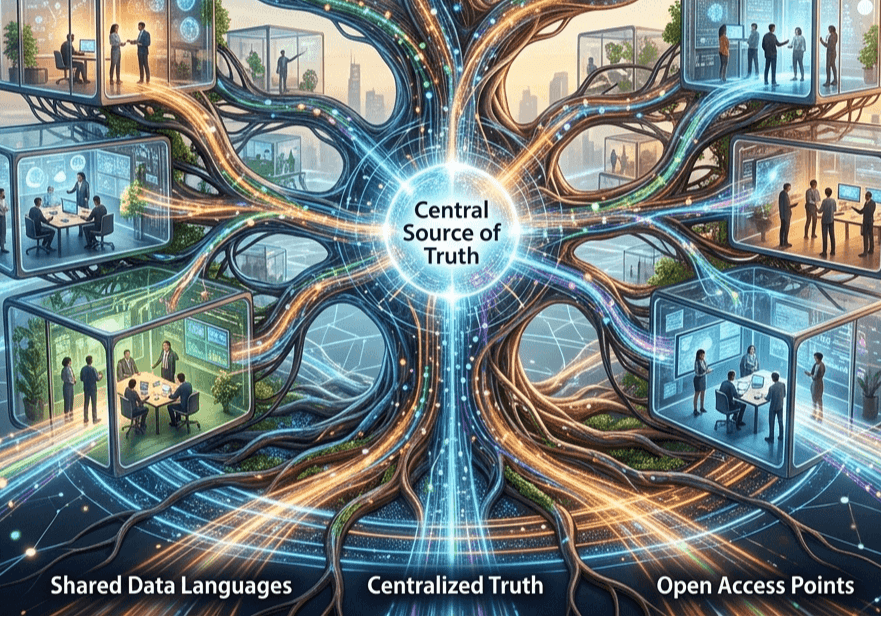
Are invisible walls slowing your team down? In many modern organizations, information remains trapped in separate "rooms" or silos, which are isolated departments that function apart from others and hinder cooperation .

Are you finding it hard to tell where your work life ends and your personal life begins?

In an era of "infinite tasks," many professionals have lost the time to actually be human . We spend our days "moving dirt"—performing manual reporting, calendar management, and repetitive data entry - instead of growing our careers .
Expertise List

Dedicated to empowering high-achieving individuals as they navigate the critical transition from initial "idea" phases to "market-ready" career pivots.
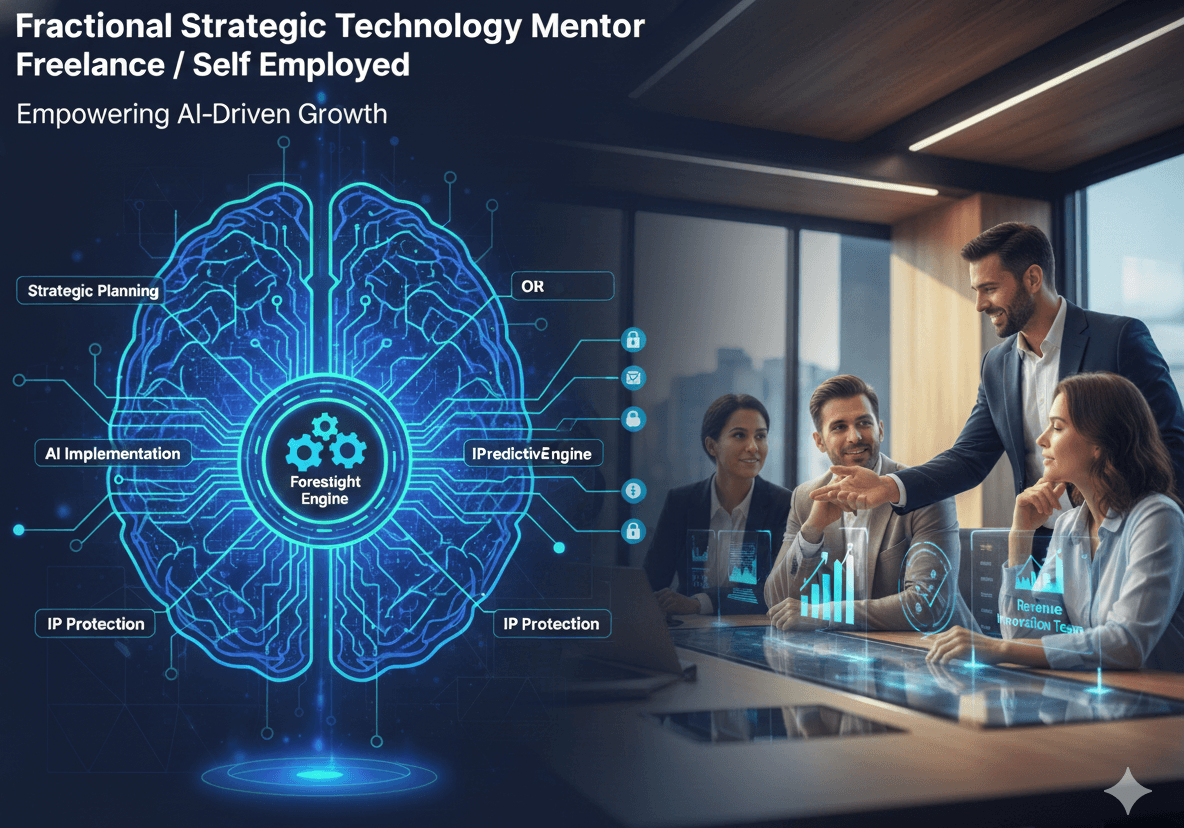
Acted in the capacity of an embedded strategic partner for Business Owners, I focus on translating core business objectives into high-performing, AI-driven systems.
This was a strategic leadership role focused on modernizing the company’s operations through technology, automation, and workforce development.
A high-impact leadership role centered on scaling a small business into a multi-state enterprise through aggressive digital transformation and process optimization.
Operations leader and digital transformation expert. Proven record modernizing infrastructure and cloud migrations, cutting data errors from 30% to <1%. Skilled in CRM architecture and vendor management, saving $300k annually through optimization.




JOIN MY MAILING LIST
RFE Online Rooted in purpose. Flourished by action. Expanded by potential.
Newsletter
The Weekly Evolve Insights to help you refine your path and exceed your goals.


© 2024 RFE Online. All rights reserved. | Privacy Policy | Terms and Conditions
Privacy policy | Legal | Terms and conditions