How to Align Your Actions with Your Intentions
Focus for February 2026
Harmonic Integration: Ensuring your daily habits and professional goals mirror your internal values to create a life that feels consistent and authentic.
Why We Do What We Don’t Want to Do
Please like the video and subscribe to the channel for more videos.
Bridging the "I Meant To" Gap
We have all felt the sting of the "I meant to" gap. It is that quiet, unsettling static between the life we imagine and the life we actually lead - the moment at the end of a long day when we realize our actions were strangers to our intentions. Perhaps you snapped at a partner despite your vow to be patient, or watched an hour of television while your gym bag sat by the door like a silent reproach.
This friction is not a character flaw, nor is it a sign of weakness. It is a natural human challenge called Divergence. It is the space where our values and our behaviors drift apart. To close this gap, we must move toward Harmonic Integration, a state where our inner compass and our outer actions move in a single, unified flow. This journey is not about achieving an impossible standard of perfection; it is about learning why we drift and how to gently, intelligently bring ourselves back to center.
The Efficiency-Obsessed Architect: Why Our Brains Bypass Our Hearts
The primary reason our hands fail to do what our hearts intend is biological. Our brains are efficiency-obsessed architects, constantly building high-speed highways over our gardens of intention. This is the Habit Loop - a mechanism designed to save mental energy by putting our lives on "autopilot."
While this biological shortcut allows us to brush our teeth or drive to work without conscious effort, it also means that our deeply ingrained routines move faster than our conscious desires for change. When we try to implement a new behavior, we aren't just making a choice; we are trying to signal a u-turn on a freeway.
"Old patterns often move faster than new intentions."
The Energy Factor and the Cognitive Clash
Living with intentionality is a high-resource activity. When we are tired, stressed, or on the verge of burnout, our mental reserves dry up. In these moments of "energy leak," we instinctively default to "easy" actions. We don’t choose the couch over the gym because we are lazy; we choose it because our brain is desperately trying to conserve what little energy remains.
This struggle is further complicated by our environment. Social pressures and physical surroundings often push us away from our stated values, leading to what psychologist Leon Festinger famously identified as Cognitive Dissonance.
When our actions clash with our beliefs, it creates a visceral mental unease. Festinger noted that we often respond to this discomfort not by changing our behavior, but by rationalizing it, weaving elaborate stories to justify why we "had" to abandon our intentions, just to restore a sense of inner order.
The Soul’s Ledger: The Hidden Tax of Internal Friction
Chronic misalignment is more than a productivity hurdle; it is an act of subtle self-betrayal. Every time we ignore the "I meant to" gap, we pay a hidden tax. This internal friction manifests as a heavy burden of guilt and a slow erosion of self-trust.
In extreme cases, this can lead to moral injury, a profound psychological wound that occurs when we live in ways that feel unethical or clash fundamentally with our integrity. This isn't just "stress"; it is the root of long-term anxiety and burnout. Furthermore, this internal divergence eventually leaks into our public lives, damaging External Trust. When our actions do not mirror our intentions, we lose the reliability required to lead others or foster the deep, authentic connections we crave.
The Sacred Buffer: Reclaiming Choice in the Five-Second Gap
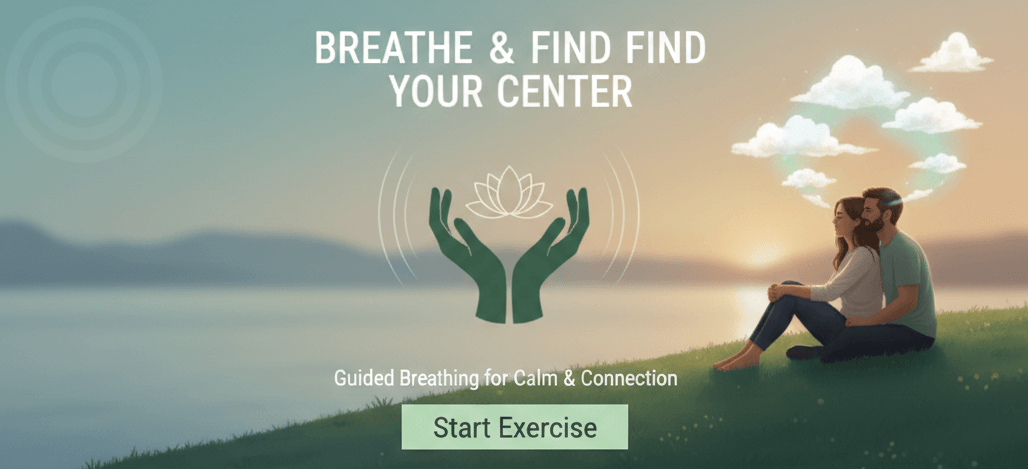
To break the autopilot cycle, we must create a "buffer zone" between impulse and action. This is the power of the five-second pause. By intentionally stopping for a few breaths, we create the space necessary for dis-identification, a core concept in psychosynthesis.
Dis-identification allows us to step back and observe a passing emotion or desire objectively, rather than being consumed by it. From this point of self-awareness, we can ask: Does this action align with who I want to be? This brief distance is the prerequisite for all self-directed growth; it is the moment we stop reacting and start choosing.
The Muscle of Integrity: Starting Small
Closing the gap does not require a radical life overhaul. In fact, large-scale changes often fail because they demand too much energy too quickly. Instead, we build Harmonic Integration through small-scale alignment.
Think of integrity as a muscle. You strengthen it through "low-stakes" actions: offering a sincere compliment, honoring a minor commitment to yourself, or choosing water over soda for one meal. These small acts of integrity create a powerful ripple effect. As you prove to yourself that you can stay aligned in the small things, you cultivate the strength and self-trust required to navigate the major crossroads of your life.
Designing the Path of Least Resistance
Willpower is a finite resource, but environment design is a permanent structural advantage. Rather than relying on brute force to stay aligned, we must manipulate our surroundings to make our intended actions the easiest choice.
This includes both our physical and social environments. If you want to reflect more, keep your journal visible on your desk; if you want to eat better, hide the distractions. Crucially, acknowledge the "social factor." Our circles influence our "default to ease." By curating a social environment that supports our values, we significantly reduce the friction of doing the right thing.
Navigating with the Inner Compass: The GROW Model
To achieve true integration, we must distinguish between goals (which are benchmarks to be hit) and values, which are the Inner Compass that provides direction. While goals have an end date, values are directions we keep moving in. To map your journey toward this alignment, use the GROW Model as a structured coaching session for yourself:
Goal: What part of your life needs more integration?
Reality: What is the real issue or obstacle getting in the way?
Options: What different strategies could you use to act more intentionally?
Will: What is the specific, immediate action you are committed to starting today?
Presence Over Perfection
Harmonic integration is not a final destination; it is a daily practice of balancing. It is the ongoing choice to show up and be real rather than a one-time achievement. A small shift in behavior today, a single moment where you close the gap between your heart and your hands, is far superior to a "perfect" plan that never leaves the page.
When we finally align our actions with our intentions, life becomes simpler, more focused, and profoundly rewarding. As you look at the hours remaining in your day, ask yourself: What is one small area where I can close the gap right now to live more authentically?
"Living authentically is far more powerful than hiding behind a gap of 'I meant to'."
Sources of Information
Based on the blog post provided, here is the list of sources used to compile the information:
1. 10 Practical Exercises, Prompts & Ideas for Exploring Your Life Purpose or Soul’s Legacy
URL: Not explicitly provided in the source text.
Description: This document provides practical strategies for identifying core values and using small-scale actions, such as offering compliments, to create a "ripple effect" of positive change in alignment with one's legacy.
2. Aligning With Your Values Activity - WELL-BEING WEEK IN LAW ACTIVITY PLANNING GUIDE
URL: Not explicitly provided in the source text.
Description: An activity guide focused on spiritual well-being that distinguishes between values and goals, defining values as the "inner compass" or directions we continuously move toward to avoid living on "autopilot".
3. Cognitive dissonance - Wikipedia
Description: This source explains Leon Festinger’s theory regarding the mental unease and psychological stress that occurs when a person's actions clash with their established beliefs or values.
4. HOW TO LIVE AN AUTHENTIC & INTENTIONAL LIFE - Cloudfront.net
URL: Not explicitly provided in the source text.
Description: A self-reflection guide written by Cosmina Matei that introduces the GROW Model (Goal, Reality, Options, Will) and emphasizes that authenticity is a daily collection of choices to be real and honest.
5. Reignite Your Spark After Burnout - The Integrative Practice
Description: Written by Dr Karen Faisandier, this article explores the six mismatches that lead to burnout, specifically highlighting "moral injury" as the conflict experienced when one must work in ways that clash with their integrity.
6. TABLE OF CONTENTS EDITORIAL - Istituto di Psicosintesi
Description: A comprehensive collection of reports and writings by Roberto Assagioli and others on psychosynthesis, detailing the practice of dis-identification to observe psychological subjects objectively from the vantage point of the Self.
7. The Psychology of Harmony and Harmonization: Advancing the Perspectives for the Psychology of Sustainability and Sustainable Development
URL: www.mdpi.com/journal/sustainability
Description: A research paper that defines harmony as a dynamic process of balancing internal and external complexities, rather than a final, static state.
8. Page 1 Peer Group Chat Summary
Description: A discussion summary detailing how being intentional with values provides a centre to focus on during challenging times and helps individuals lead by example.
9. Value–Action Alignment in Large Language Models under Privacy–Prosocial Conflict
URL: Not provided in the source snippet (referenced as an arXiv preprint).
Description: A technical paper that discusses the "value-action gap" and explores how competing attitudes (such as privacy concerns versus prosocial motivations) jointly predict downstream commitments and actions.
10. An introduction to Body-Mind Centering
Description: An introductory text by Bonnie Bainbridge Cohen explaining that "centering" is a process of balancing based on the alignment of awareness and action.
In the spirit of being a find alignment and to open up to the best resources available at the time of writing for this topic, the research for this video and blog was collated using Google NotebookLM - an example of using AI as a strategic thought partner.
#ClosingTheGap, #IntentionalLiving, #PersonalGrowth, #HarmonicIntegration, #SelfAwareness, #Integrity, #Mindfulness, #HabitChange, #Values, #Productivity


RFE Online Rooted in purpose. Flourished by action. Expanded by potential.
Newsletter
The Weekly Evolve Insights to help you refine your path and exceed your goals.
© 2024 RFE Online. All rights reserved. | Privacy Policy | Terms and Conditions
Privacy policy | Legal | Terms and conditions